
Blog
Announcing Dagster 1.4: Material Girl

Announcing Dagster 1.4: Material Girl

July 21, 2023
Announcing Dagster 1.4: Material Girl

The latest release brings major new dbt capabilities, new asset materialization controls, and more.

We are pleased to announce that Dagster 1.4.0 —  “Material Girl” —   is now available on Dagster Cloud and in Open Source.  Full details on the release can be found in the release notes, but here are the highlights:

Supercharge dbt™

The headlining act on this release is the dagster-dbt enhancements.  While Dagster already provided a dagster-dbt integration (as well as a dbt Cloud integration), we have gathered input from Dagster users who rely heavily on dbt and introduced brand new capabilities:

  • A new @dbt-assets decorator allows much more control over how Dagster runs your dbt project.
  • A new scaffolding command line interface makes it easy to create files and directories for a Dagster project that wraps an existing dbt project.
  • Improved APIs for defining asset dependencies between upstream dbt assets and downstream non-dbt assets. It is now much easier to specify dependencies between dbt models and upstream non-dbt assets by specifying Dagster asset keys in the dbt metadata for dbt sources.
>    View the Aug 2nd, 2023 event in which the Dagster team reviewed the new functionality.  

Evolving asset materialization, improving the UI, and more

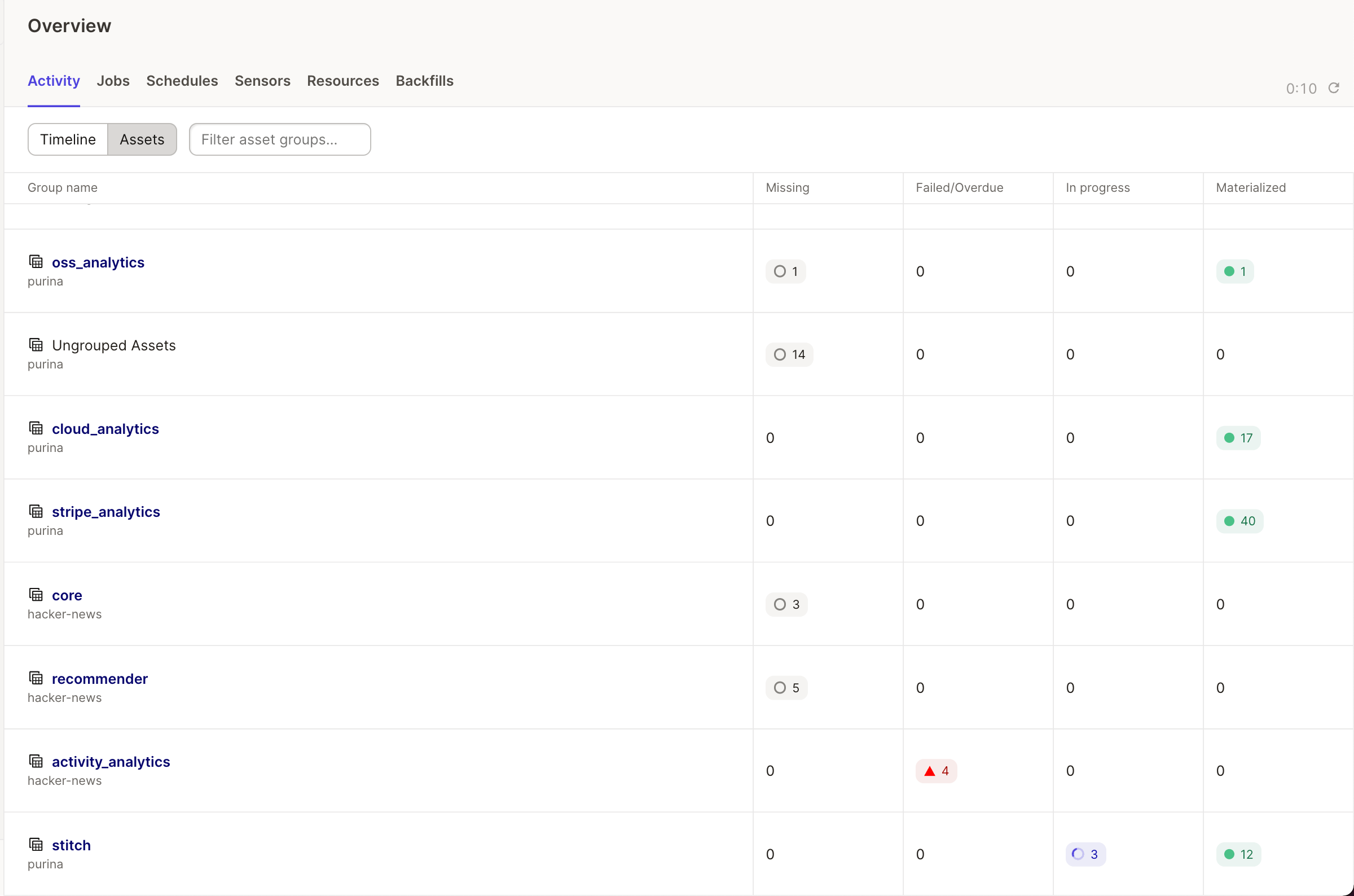
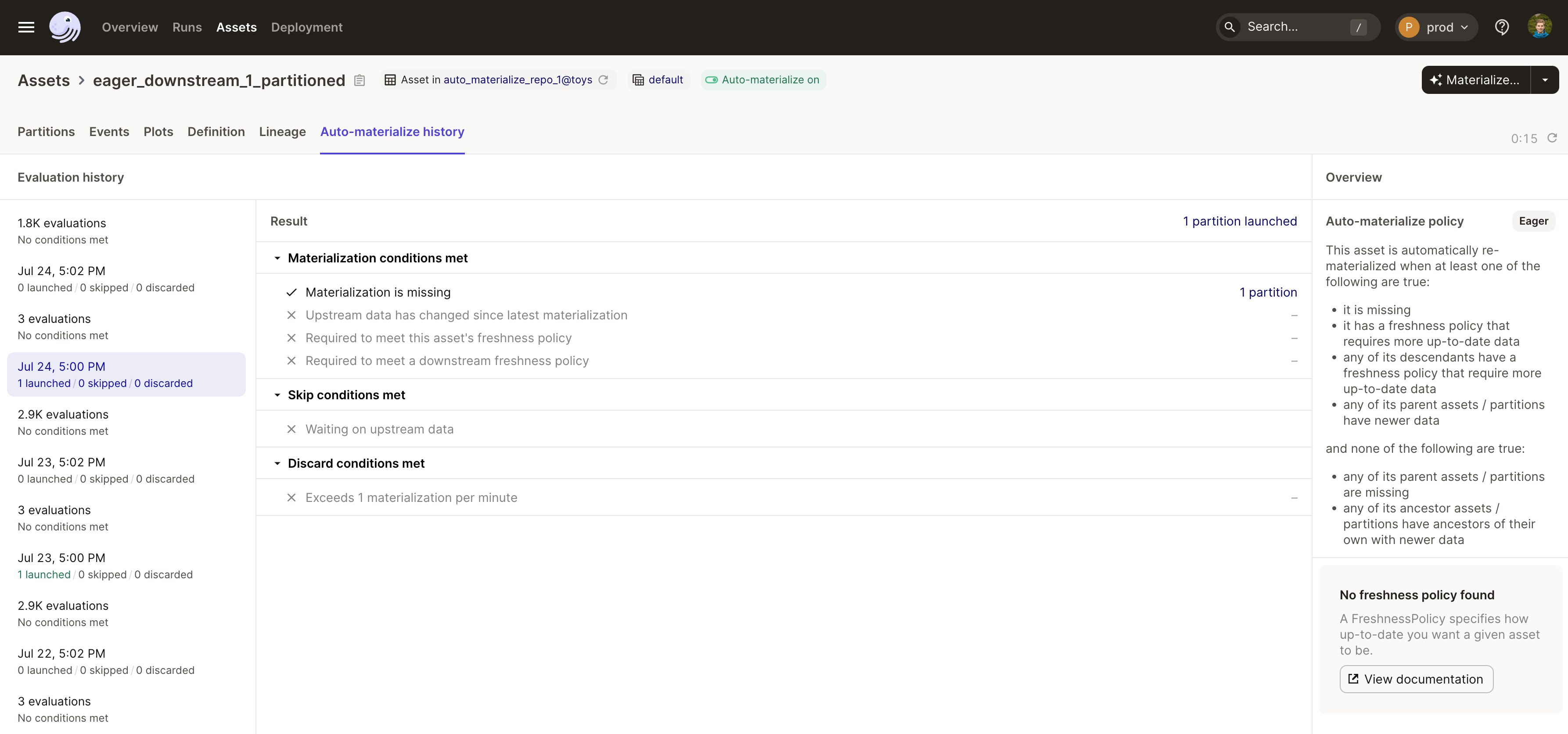
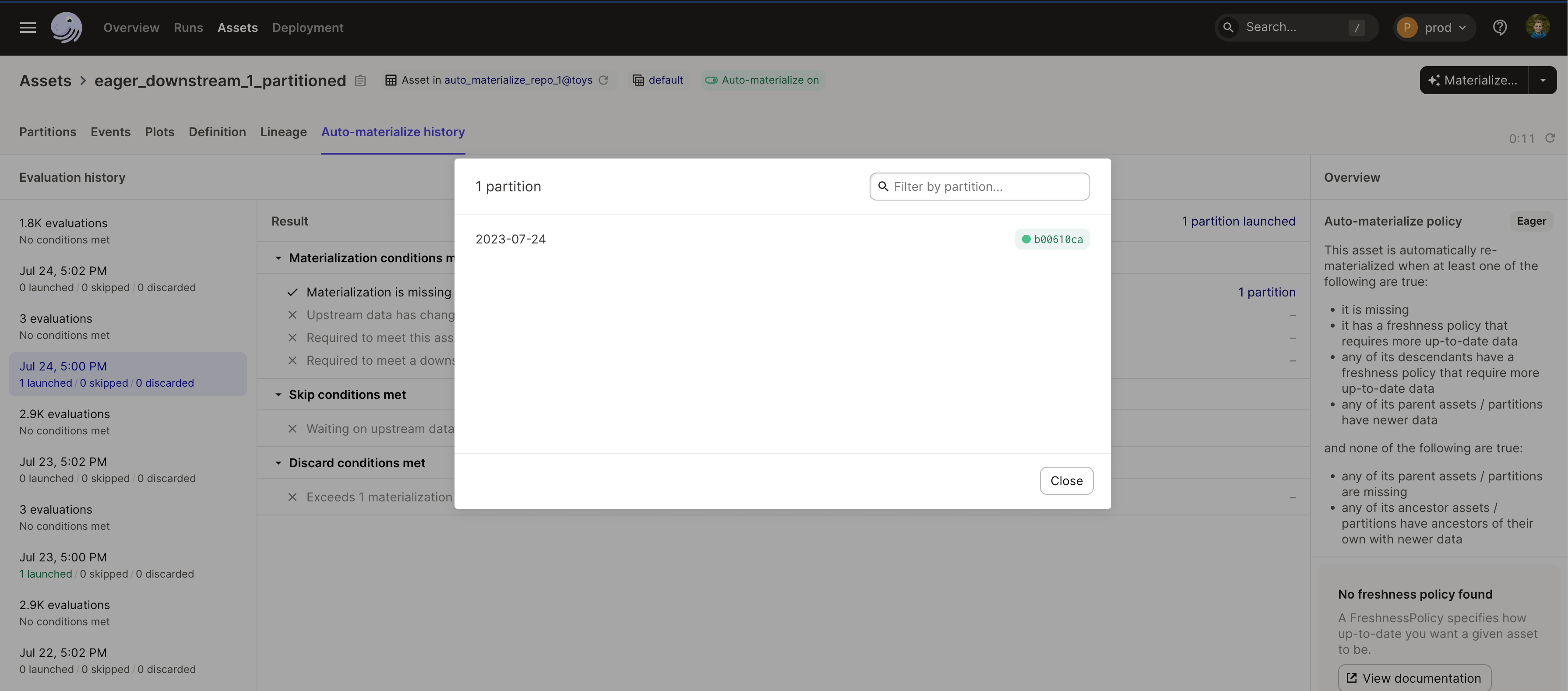
We continue to evolve asset materialization, giving you more fine-grained control and observability over when, why, and how your computations run.  These include auto-materialization history, auto-materialization performance, asset backfill cancellation, and a new group-level asset status UI.
Dagster's new optional horizontal alignment.
   Dagster's new auto-materialization history provides complete transparency over how materialization rules were executed.  
Dagster's new optional horizontal alignment.
   The auto-materialization history provides granular details down to the partition level.  
Dagster's new optional horizontal alignment.
   The new Assets Overview dashboard shows the status of all assets in your deployment, rolled up by group.  

We have introduced two new experimental features:  op-level concurrency limits and the ability to observe source assets without defining jobs.

We have also focused on improving some of the framework ergonomics, making it more logical and accessible.  Improvements here include:

  • Deprecation of non_argument_deps in favor of a new deps parameter (makes it clear that this is a first-class way of defining dependencies, makes code more concise, while still accepting previous parameters)
  • Renaming Dagit to Dagster UI (reducing the number of terms that new users need to learn)
  • Auto-populating the launchpad with default field values (reducing cognitive load).

We have moved some features out of the “experimental” stage: DynamicPartitionDefinition and SensorResult.

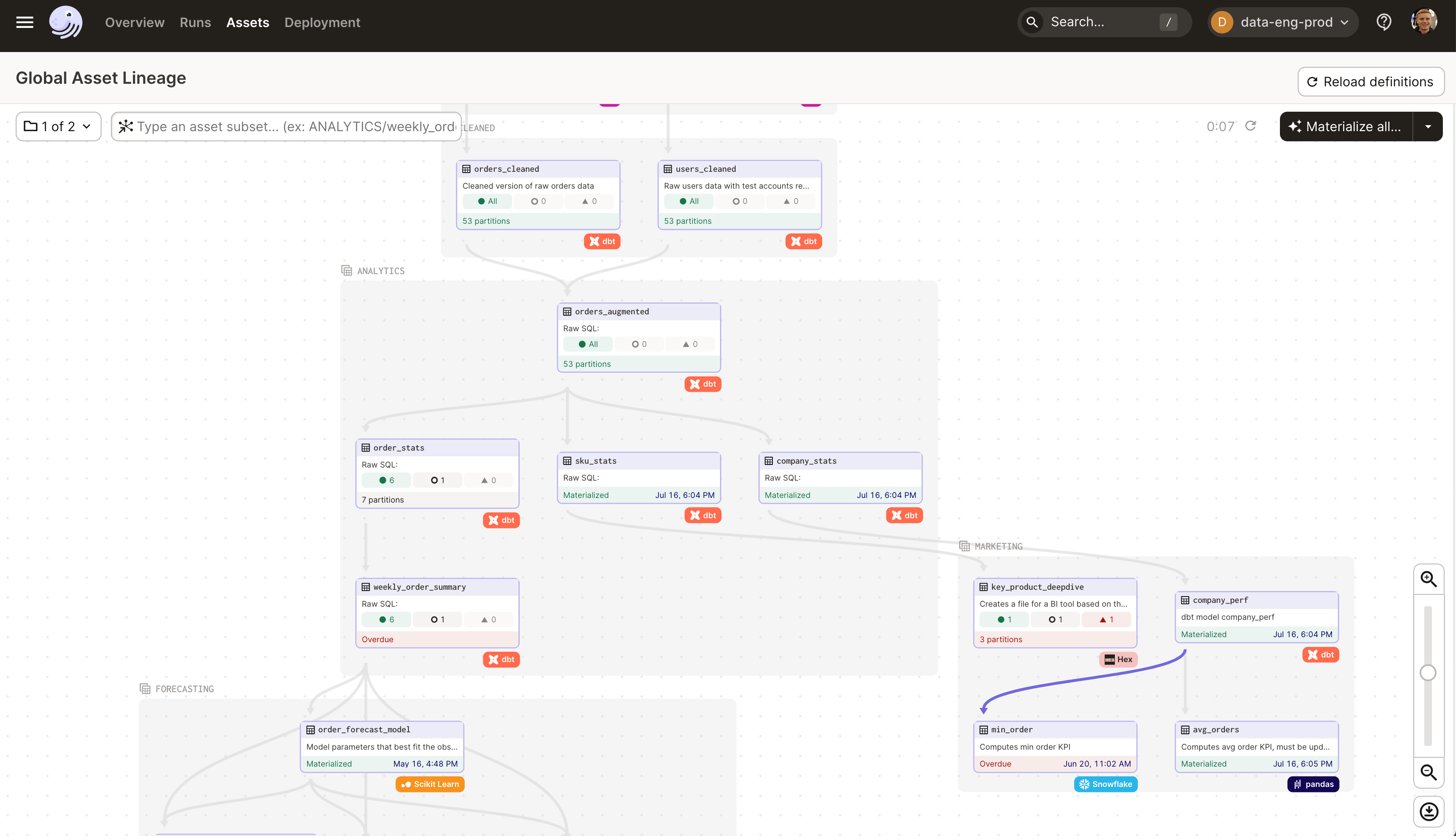
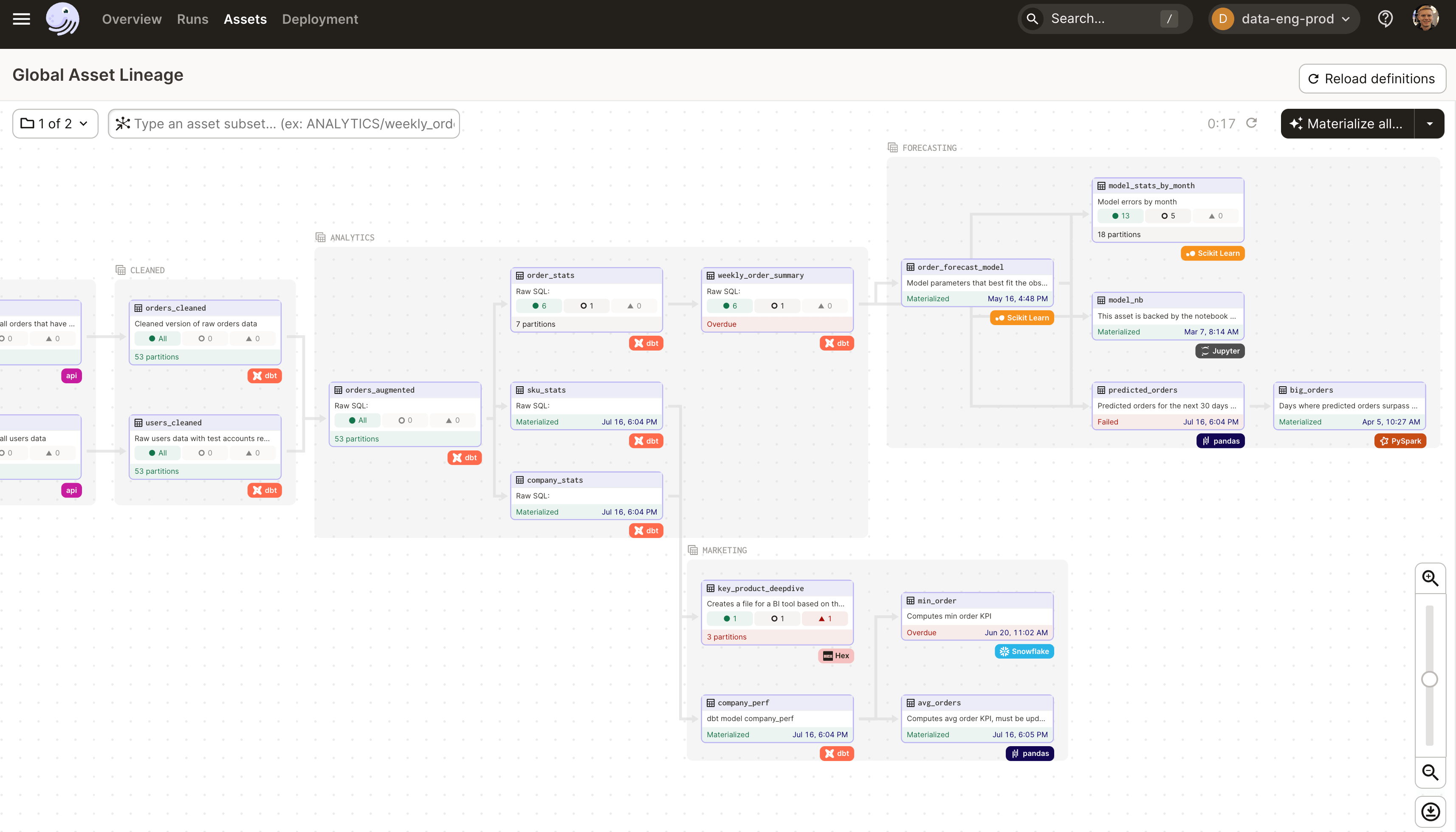
Finally, we have a new UI layout change that is flagged as experimental and open to your feedback in the GitHub discussion found here.  The new layout renders the graph horizontally left-to-right instead of vertically. You can try the new horizontal asset graph layout by enabling the Experimental horizontal asset DAGs feature flag in your user settings. Give it a try, and let us know what you think.
Dagster's default vertical alignment.
       Dagster's default vertical alignment.      
Dagster's new optional horizontal alignment.
       Dagster's new optional horizontal alignment.      

1.4 Contributors:

We would like to thank all of the contributors to the 1.4 Dagster Core release.

askvinni | yuvalgimmunai  | nigelainscoe | plaflamme  | danielecappuccio  | armandobelardo  | boenshao  | loerinczy  | akan72  | out-running-27  | guy-rvvup  | thijs-blom  | jrouly  | adeboyed  | snikch  | chrishiste  | renzhe-brian  | chodera  | joel-olazagasti  | danielgafni  | KMontag42  | srggrs  | Jinior  | ldnicolasmay  | Elliot2718  | PeterJCLaw  | Tanguy-LeFloch  | leehuwuj  | weberdavid  | keyz  | pdstrnadJC  | nina-j  | wkeifenheim  | rubikplanet
Have feedback or questions? Start a discussion in Slack or Github.

Interested in working with us? View our open roles.

Want more content like this? Follow us on LinkedIn.

Dagster Newsletter

Get updates delivered to your inbox

Latest writings

The latest news, technologies, and resources from our team.

Multi-Tenancy for Modern Data Platforms
Webinar

April 7, 2026

Multi-Tenancy for Modern Data Platforms

Learn the patterns, trade-offs, and production-tested strategies for building multi-tenant data platforms with Dagster.

Deep Dive: Building a Cross-Workspace Control Plane for Databricks
Webinar

March 24, 2026

Deep Dive: Building a Cross-Workspace Control Plane for Databricks

Learn how to build a cross-workspace control plane for Databricks using Dagster — connecting multiple workspaces, dbt, and Fivetran into a single observable asset graph with zero code changes to get started.

Dagster Running Dagster: How We Use Compass for AI Analytics
Webinar

February 17, 2026

Dagster Running Dagster: How We Use Compass for AI Analytics

In this Deep Dive, we're joined by Dagster Analytics Lead Anil Maharjan, who demonstrates how our internal team utilizes Compass to drive AI-driven analysis throughout the company.

Making Dagster Easier to Contribute to in an AI-Driven World
Blog

April 1, 2026

Making Dagster Easier to Contribute to in an AI-Driven World

AI has made contributing to open source easier but reviewing contributions is still hard. At Dagster, we’re improving the contributor experience with smarter review tooling, clearer guidelines, and a focus on contributions that are easier to evaluate, merge, and maintain.

DataOps with Dagster: A Practical Guide to Building a Reliable Data Platform
Blog

March 17, 2026

DataOps with Dagster: A Practical Guide to Building a Reliable Data Platform

DataOps is about building a system that provides visibility into what's happening and control over how it behaves

Unlocking the Full Value of Your Databricks
Blog

March 12, 2026

Unlocking the Full Value of Your Databricks

Standardizing on Databricks is a smart strategic move, but consolidation alone does not create a working operating model across teams, tools, and downstream systems. By pairing Databricks and Unity Catalog with Dagster, enterprises can add the coordination layer needed for dependency visibility, end-to-end lineage, and faster, more confident delivery at scale.

How Magenta Telekom Built the Unsinkable Data Platform
Case study

February 25, 2026

How Magenta Telekom Built the Unsinkable Data Platform

Magenta Telekom rebuilt its data infrastructure from the ground up with Dagster, cutting developer onboarding from months to a single day and eliminating the shadow IT and manual workflows that had long slowed the business down.

Scaling FinTech: How smava achieved zero downtime with Dagster
Case study

November 25, 2025

Scaling FinTech: How smava achieved zero downtime with Dagster

smava achieved zero downtime and automated the generation of over 1,000 dbt models by migrating to Dagster's, eliminating maintenance overhead and reducing developer onboarding from weeks to 15 minutes.

Zero Incidents, Maximum Velocity: How HIVED achieved 99.9% pipeline reliability with Dagster
Case study

November 18, 2025

Zero Incidents, Maximum Velocity: How HIVED achieved 99.9% pipeline reliability with Dagster

UK logistics company HIVED achieved 99.9% pipeline reliability with zero data incidents over three years by replacing cron-based workflows with Dagster's unified orchestration platform.

Modernize Your Data Platform for the Age of AI
Guide

January 15, 2026

Modernize Your Data Platform for the Age of AI

While 75% of enterprises experiment with AI, traditional data platforms are becoming the biggest bottleneck. Learn how to build a unified control plane that enables AI-driven development, reduces pipeline failures, and cuts complexity.

Download the eBook on how to scale data teams
Guide

November 5, 2025

Download the eBook on how to scale data teams

From a solo data practitioner to an enterprise-wide platform, learn how to build systems that scale with clarity, reliability, and confidence.

Download the e-book primer on how to build data platforms
Guide

February 21, 2025

Download the e-book primer on how to build data platforms

Learn the fundamental concepts to build a data platform in your organization; covering common design patterns for data ingestion and transformation, data modeling strategies, and data quality tips.