Blog
Announcing Dagster 1.5: How Will I Know?

Announcing Dagster 1.5: How Will I Know?

October 2, 2023
Announcing Dagster 1.5: How Will I Know?

Ahead of Launch Week, we are proud to be rolling out some exciting new capabilities.

In the run-up to our Fall Launch Week, our 1.5 release brings some major new enhancements to Dagster. So, with a nod to Whitney Houston, here is what is in store with this release, along with a recap of major enhancements in the seventeen sub-releases and 877 commits between 1.4.0 and 1.5.0.

 Looking for a more granular list of enhancements?
Check out the full Dagster Changelog.

Data Quality with Dagster Asset Checks:

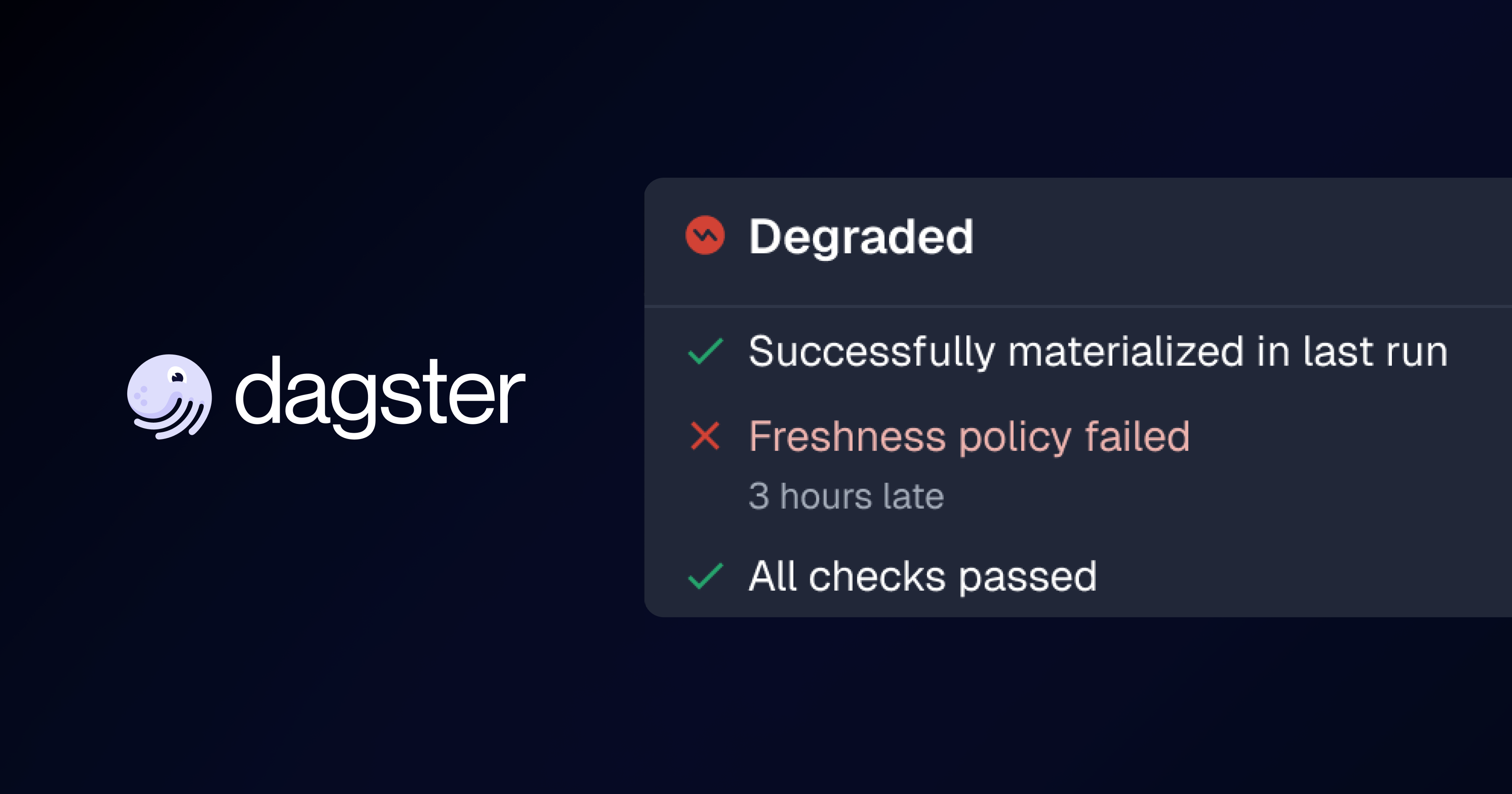
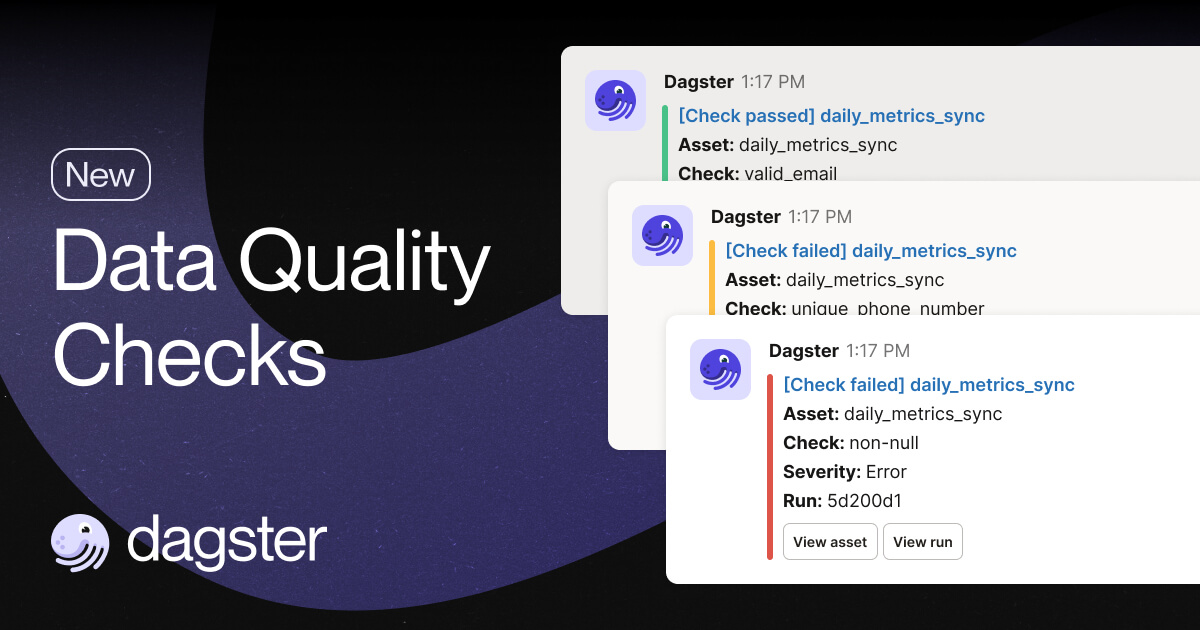
How will I know if my data meets quality standards?  Well now you can - directly from the orchestration layer.  With Dagster Asset Checks (introduced as experimental in Dagster 1.4.12), you no longer need to juggle different solutions to define and run data quality checks. You can now drop in a checkpoint at any stage of your data pipeline, run an asset through a check that you define, and then build orchestration logic based on the test outcome.

With Dagster’s Asset-centric framework, the results of these checks are now surfaced in the UI:

Dagster's new Asset Checks help implement data quality steps
   Dagster Asset Checks as displayed in the asset graph. (click to zoom in)  

Screengrab of the Dagster UI, demonstrating an asset graph with successful, failed, and unexecuted asset checks.

For more details on Dagster’s Asset Checks, see the docs.  Note that Asset Checks remain “experimental” until we have had the chance to field test this feature some more.

Sandy Ryza will be presenting on Asset Checks on day two of Launch Week (Oct 9th).

Dagster Pipes

Dagster has traditionally integrated business logic and orchestration, and for simple data pipelines where data fits in memory and is directly processed within the orchestrator, this works well.

However this approach falls flat in a number of important contexts:

  • When dealing with pre-existing code and python environments.
  • When writing business logic in remote or hosted execution environments, such as Spark.
  • When dealing with business logic written in other programming languages.

Dagster 1.5 introduces a new protocol designed to address these situations. We call it Pipes - short for "Protocol for Inter-Process Execution with Streaming logs and metadata."

Dagster Pipes
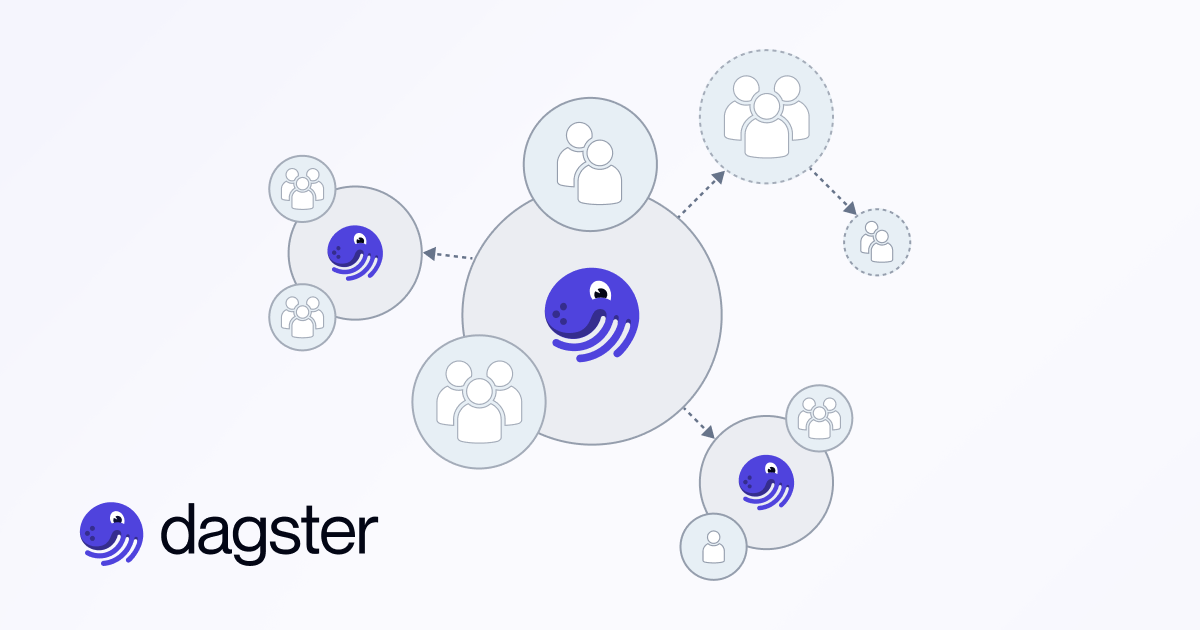
Dagster Pipes: Expand your span-of-control.
 With Pipes, Dagster becomes the ubiquitous, composable data control plane for all data teams in the organization.  

With Dagster Pipes, you can:* Incorporate existing code into Dagster without huge refactors* Onboard stakeholder teams onto Dagster incrementally* Run code in external environments and stream log and structured metadata back to Dagster* Separate orchestration and business logic environments* Use languages other than Python with Dagster* Forget about chasing down dependency conflicts, as Dagster Pipes is dependency-free

A lot more context and details on dagster-pipes can be found in the Github discussion.

Nick Schrock will be presenting on Dagster Pipes on the final day of Launch Week (Oct 13th).

Monitor Cloud Costs with Dagster Insights (Dagster Cloud)

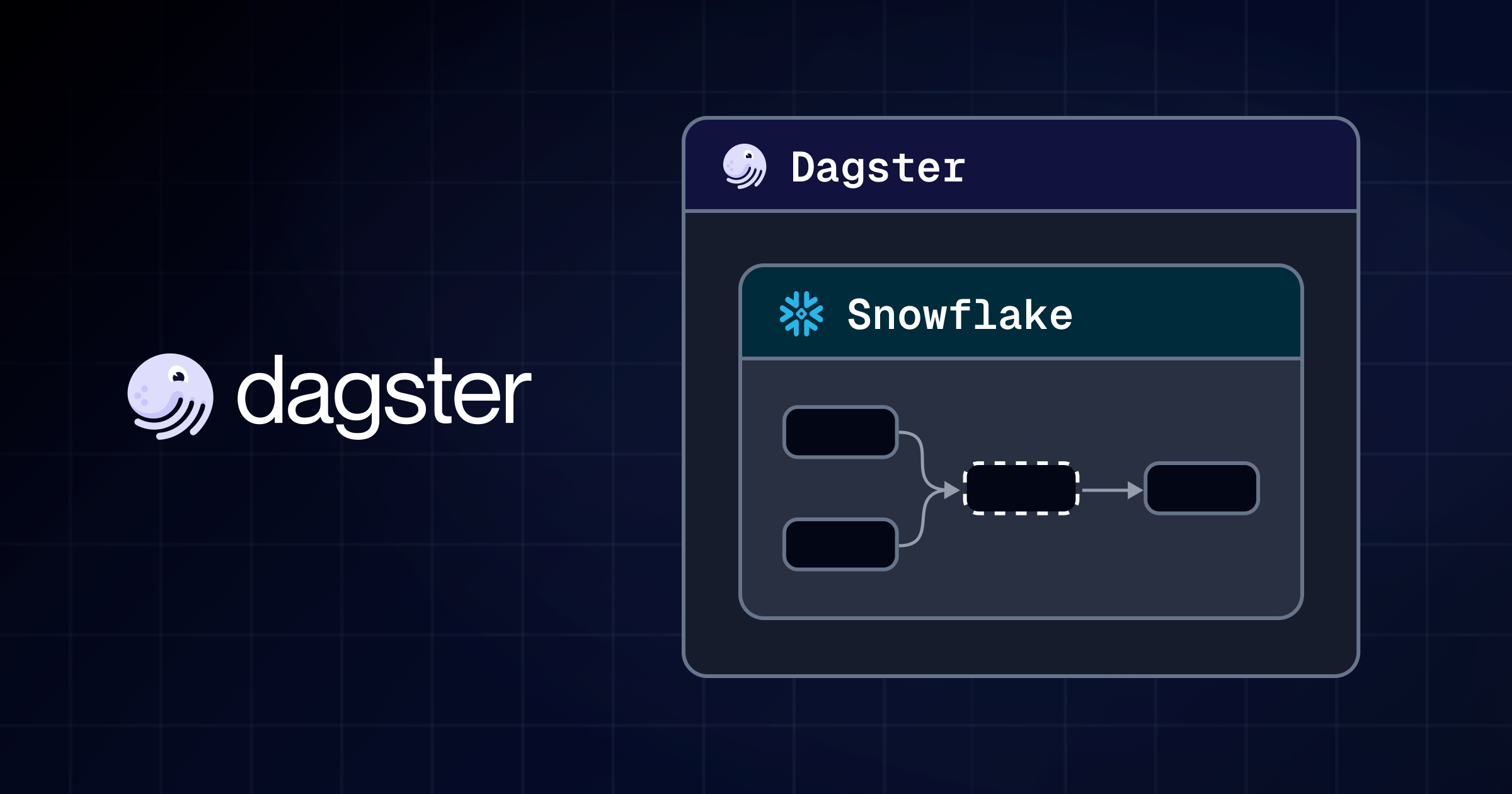
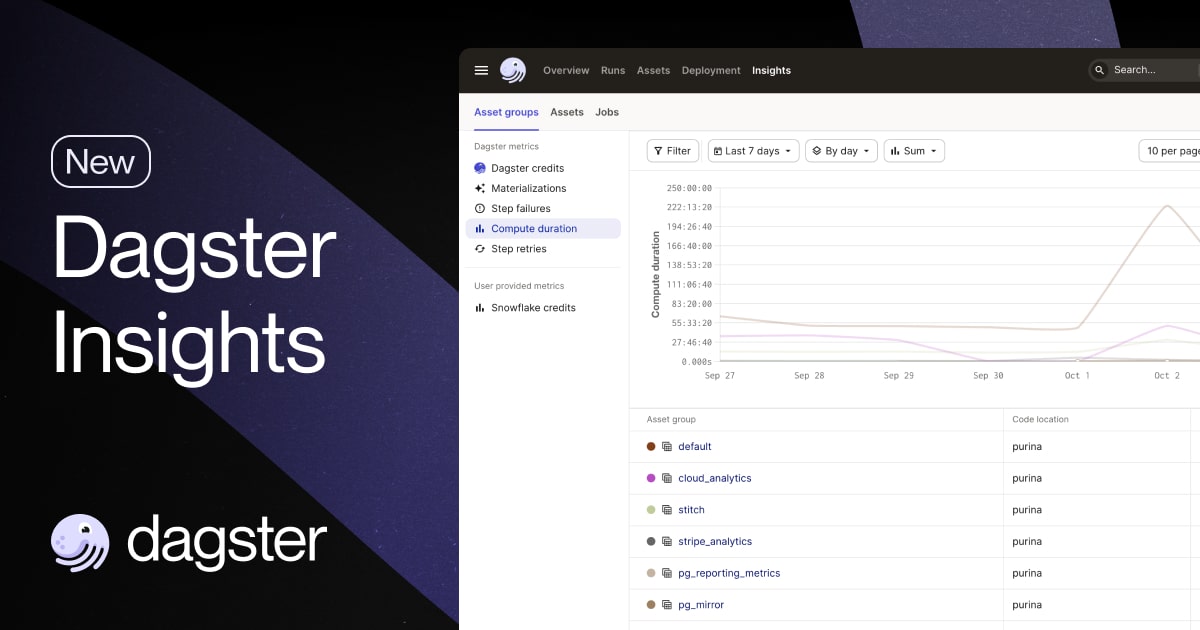
We have released an experimental dagster_cloud.dagster_insights module that contains utilities for capturing and submitting external metrics about data operations to Dagster Cloud via an API. Dagster Cloud Insights provides improved visibility into usage and cost metrics such as run duration and Snowflake credits in the Cloud UI.

Jarred Colli and Ben Pankow will be discussing and demoing Dagster Insights on day three of Dagster Launch Week (Oct 10th).

Dagster Docs and Dagster University

A few months ago, Dagster CEO Pete Hunt talked about the learning curve for Dagster in his Masterplan blog post, saying:

> Dagster has a reputation for being extremely powerful. However, the learning curve is still too steep.

To address this, we’ve created Dagster University.
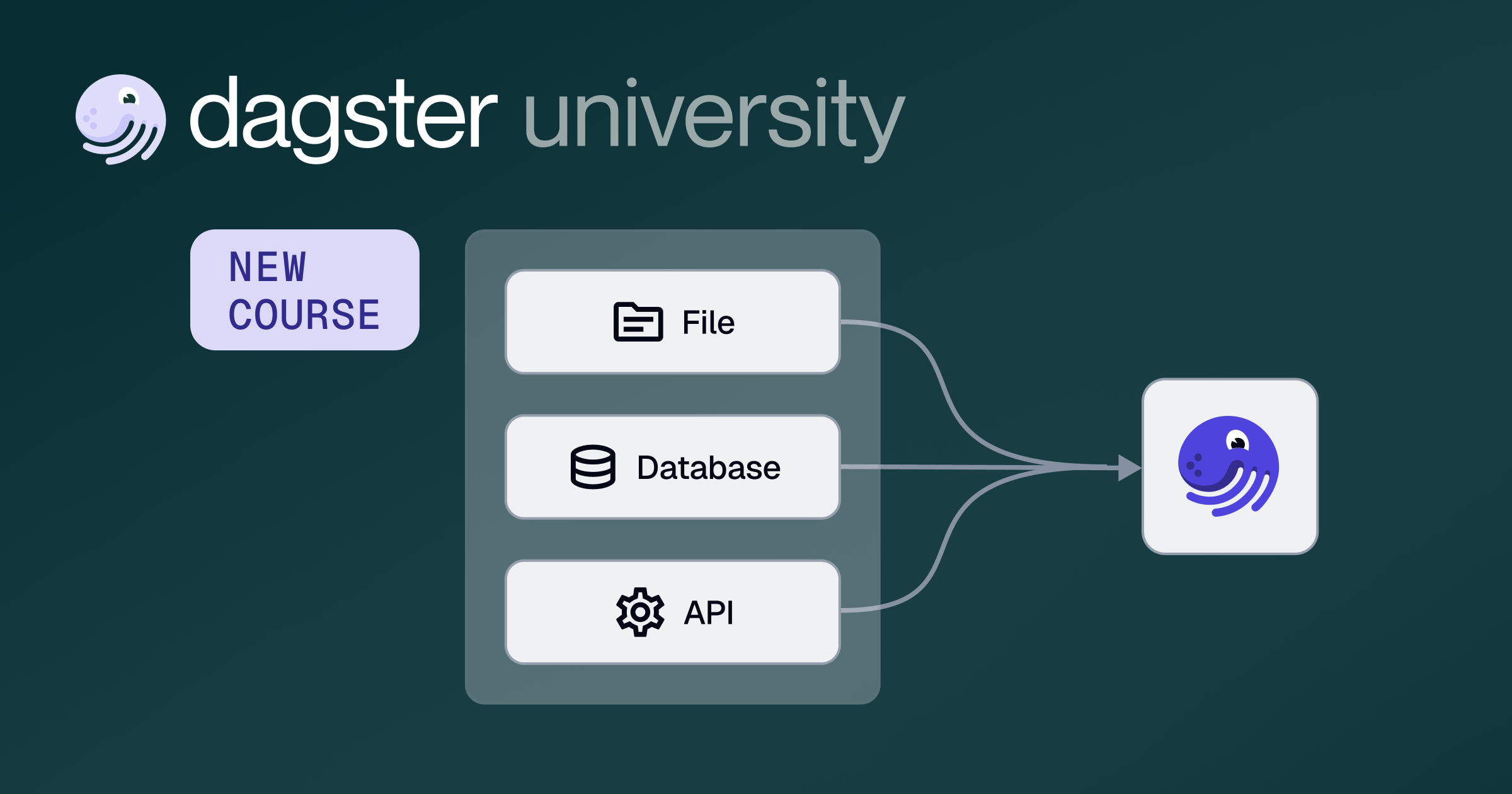
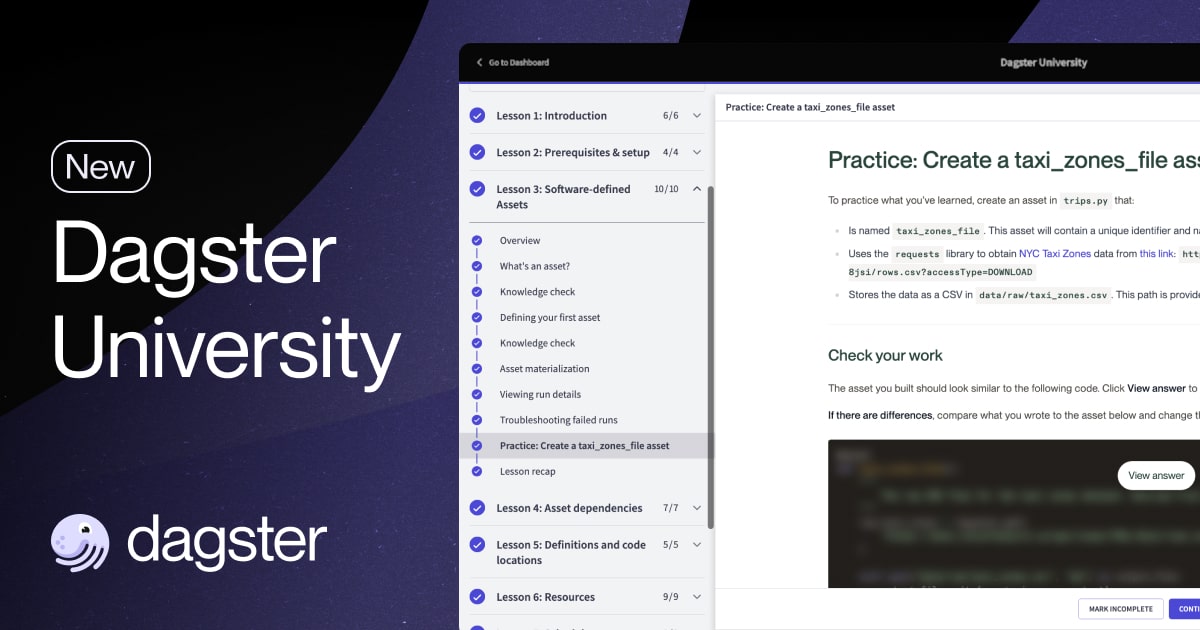
The University’s first course, Dagster Essentials, is geared towards creating a solid foundation for Dagster beginners to build on. With detailed explanations, quizzes, and practice problems, this course will help you and your team get to your “Aha!” moment in no time.

Dagster University
   Dagster University Learning Content.  

Check it out, give us your feedback, and look out for more learning content in the future.

Erin Cochran will be unveiling Dagster University on day four of Dagster Launch Week (Oct 11th).

Dagster UI performance improvements:

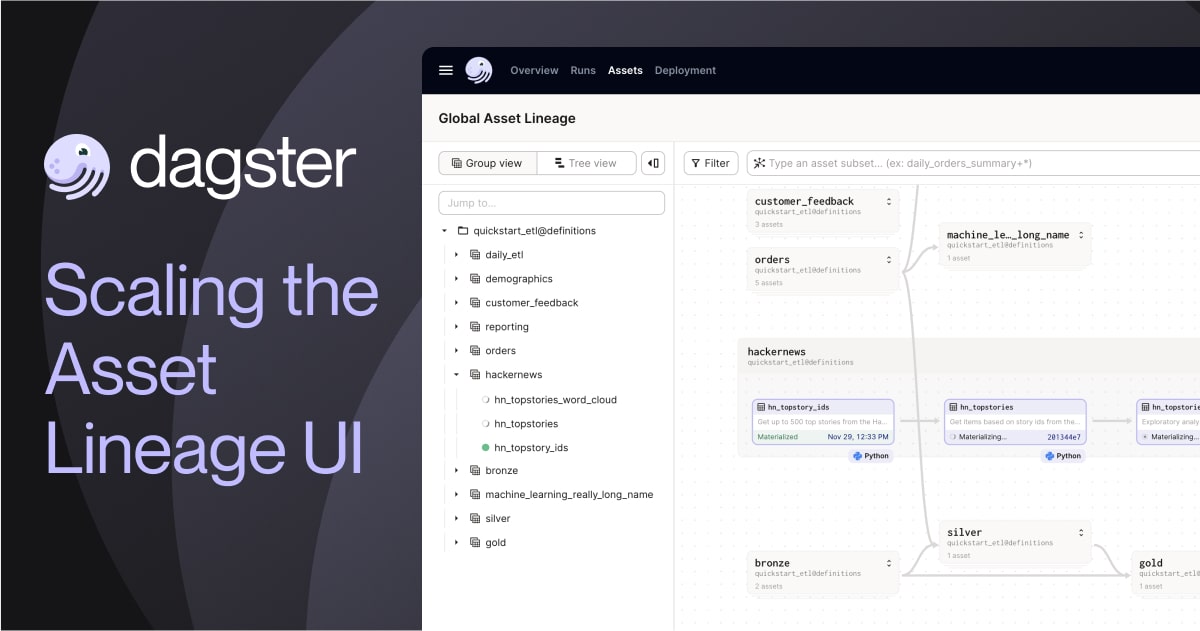
Global Asset Graph performance has been dramatically improved for graphs over 50 assets - the first time you load the graph, it will be cached to disk, and subsequently, the graph should load instantly.Furthermore, we have made changes that make navigating even the largest graphs (1,000+ assets) a smooth experience.

Contributors since 1.4.0:

We would like to thank all of the community members who have contributed to Dagster since the 1.4 release, building up to this week's 1.5 launch.

Dagster core committers for version 1.5
   All of the wonderful community contributors to Dagster Core from 1.4.1 to 1.5.0  

Peng Wang | Janos Roden | Chris Histe | Sonny Arora, Ph.D. | Zach Paden | tnk-dev | Sergey Mezentsev | Christian Hollinger | zyd14 | Judah Rand | Markus Werner | motuzov | Casper Weiss Bang | L. D. Nicolas May | Edvard Lindelof | Tadas Malinauskas | harrylojames | Francisco García | Tambe Tabitha Achere | Sethu Sabarish | Alex Kan | Michel Rouly | Rui | Divyansh Tripathi | Abdó Roig-Maranges | Klim Lyapin | Daniel Gafni | Sirawat S.

Community Contributions Highlights
  • has_dynamic_partition implementation has been optimized. Thanks @edvardlindelof!
  • [dagster-airbyte] Added an optional stream_to_asset_map argument to build_airbyte_assets to support the Airbyte prefix setting with special characters. Thanks @chollinger93!
  • [dagster-k8s] Moved “labels” to a lower precedence. Thanks @jrouly!
  • [dagster-k8s] Improved handling of failed jobs. Thanks @Milias!
  • [dagster-databricks] Fixed an issue where DatabricksPysparkStepLauncher fails to get logs when job_run doesn’t have cluster_id at root level. Thanks @PadenZach!
  • Docs type fix from @sethusabarish, thank you!

Have feedback or questions? Start a discussion in Slack or Github.

Interested in working with us? View our open roles.

Want more content like this? Follow us on LinkedIn.

Dagster Newsletter

Get updates delivered to your inbox

Latest writings

The latest news, technologies, and resources from our team.

Multi-Tenancy for Modern Data Platforms
Webinar

April 7, 2026

Multi-Tenancy for Modern Data Platforms

Learn the patterns, trade-offs, and production-tested strategies for building multi-tenant data platforms with Dagster.

Deep Dive: Building a Cross-Workspace Control Plane for Databricks
Webinar

March 24, 2026

Deep Dive: Building a Cross-Workspace Control Plane for Databricks

Learn how to build a cross-workspace control plane for Databricks using Dagster — connecting multiple workspaces, dbt, and Fivetran into a single observable asset graph with zero code changes to get started.

Dagster Running Dagster: How We Use Compass for AI Analytics
Webinar

February 17, 2026

Dagster Running Dagster: How We Use Compass for AI Analytics

In this Deep Dive, we're joined by Dagster Analytics Lead Anil Maharjan, who demonstrates how our internal team utilizes Compass to drive AI-driven analysis throughout the company.

Making Dagster Easier to Contribute to in an AI-Driven World
Blog

April 1, 2026

Making Dagster Easier to Contribute to in an AI-Driven World

AI has made contributing to open source easier but reviewing contributions is still hard. At Dagster, we’re improving the contributor experience with smarter review tooling, clearer guidelines, and a focus on contributions that are easier to evaluate, merge, and maintain.

DataOps with Dagster: A Practical Guide to Building a Reliable Data Platform
Blog

March 17, 2026

DataOps with Dagster: A Practical Guide to Building a Reliable Data Platform

DataOps is about building a system that provides visibility into what's happening and control over how it behaves

Unlocking the Full Value of Your Databricks
Blog

March 12, 2026

Unlocking the Full Value of Your Databricks

Standardizing on Databricks is a smart strategic move, but consolidation alone does not create a working operating model across teams, tools, and downstream systems. By pairing Databricks and Unity Catalog with Dagster, enterprises can add the coordination layer needed for dependency visibility, end-to-end lineage, and faster, more confident delivery at scale.

How Magenta Telekom Built the Unsinkable Data Platform
Case study

February 25, 2026

How Magenta Telekom Built the Unsinkable Data Platform

Magenta Telekom rebuilt its data infrastructure from the ground up with Dagster, cutting developer onboarding from months to a single day and eliminating the shadow IT and manual workflows that had long slowed the business down.

Scaling FinTech: How smava achieved zero downtime with Dagster
Case study

November 25, 2025

Scaling FinTech: How smava achieved zero downtime with Dagster

smava achieved zero downtime and automated the generation of over 1,000 dbt models by migrating to Dagster's, eliminating maintenance overhead and reducing developer onboarding from weeks to 15 minutes.

Zero Incidents, Maximum Velocity: How HIVED achieved 99.9% pipeline reliability with Dagster
Case study

November 18, 2025

Zero Incidents, Maximum Velocity: How HIVED achieved 99.9% pipeline reliability with Dagster

UK logistics company HIVED achieved 99.9% pipeline reliability with zero data incidents over three years by replacing cron-based workflows with Dagster's unified orchestration platform.

Modernize Your Data Platform for the Age of AI
Guide

January 15, 2026

Modernize Your Data Platform for the Age of AI

While 75% of enterprises experiment with AI, traditional data platforms are becoming the biggest bottleneck. Learn how to build a unified control plane that enables AI-driven development, reduces pipeline failures, and cuts complexity.
Download the eBook on how to scale data teams
Guide

November 5, 2025

Download the eBook on how to scale data teams

From a solo data practitioner to an enterprise-wide platform, learn how to build systems that scale with clarity, reliability, and confidence.
Download the e-book primer on how to build data platforms
Guide

February 21, 2025

Download the e-book primer on how to build data platforms

Learn the fundamental concepts to build a data platform in your organization; covering common design patterns for data ingestion and transformation, data modeling strategies, and data quality tips.