
AI has made contributing to open source easier but reviewing contributions is still hard. At Dagster, we’re improving the contributor experience with smarter review tooling, clearer guidelines, and a focus on contributions that are easier to evaluate, merge, and maintain.
Dagster started as an open source project, and community contributions remain an important part of how the project evolves.
At the same time, open-source contributions have changed rapidly. AI tools have made it much easier to generate pull requests, but reviewing a PR still takes context, judgment, and coordination. Across OSS, many maintainers are dealing with a new imbalance: proposed changes are becoming easier to produce than to review thoroughly.
We have felt some of those shifts ourselves. Over the past year, we have been migrating Dagster to a monorepo to better support both the open-source project and Dagster+ under a single development model.
Now that the migration is settling down, we are focused on making contributions to Dagster smoother, clearer, and more predictable again. Our goal is to make the process easier to navigate, easier to review, and more approachable for everyone who wants to help improve Dagster.
Reducing review friction
Like most large repositories, our repo runs a broad set of automated checks on every pull request. We lint with ruff, run tests, type-check Python, build documentation, and verify that site changes can be deployed successfully. Those checks are important, but they only answer part of the question. Passing CI tells us that a change does not obviously break the repository. It does not always tell us whether a PR matches the conventions and quality bar of the codebase.
That gap often creates the most frustrating part of contributing: the review loop. A pull request may be functionally correct but still needs several rounds of feedback to better align with repository conventions or improve clarity. To make that process smoother, we have been adding more automated review tools directly into our pull request workflow.
An example of a tool you may see on a Dagster pull request is Greptile for repository-aware suggestions based on the patterns already in use.
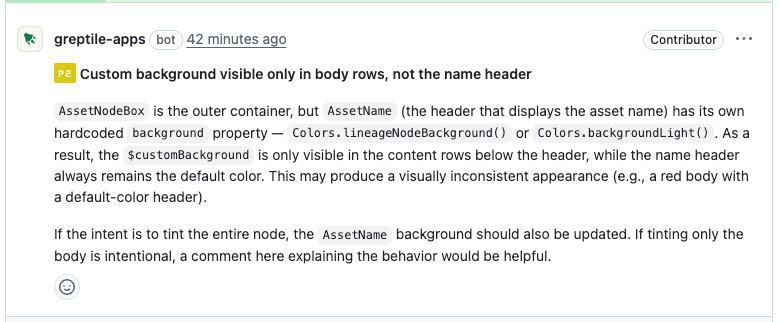
These tools help surface repository-specific expectations earlier and reduce avoidable review churn, so human reviewers can focus on the substance of a change: whether it solves a real problem, fits the product, and is easy to maintain.
What’s next for contributors
Improving review tooling is only one part of making Dagster easier to contribute to. We also want to make it clearer how to contribute effectively in the first place: how the repository is organized, what good changes look like, and which kinds of contributions are especially valuable.
We already have contributor guidance for both code and docs, including our code contribution guidelines and documentation contribution guidelines. We want to keep building on that foundation so contributors can spend less time guessing about conventions and more time making useful changes.
We also think tools can help here. For example, contributors using AI-assisted workflows can use resources like the Dignified Python skill to produce changes that are more consistent, readable, and reviewable. Over time, we want contributing to Dagster to feel more guided, more predictable, and more approachable for both human contributors and AI-assisted ones.
Setting a PR up for success
A reality of OSS in an AI-assisted world is that pull requests are becoming easier to generate than they are to review. The contributions that move most smoothly tend to share a few common traits.
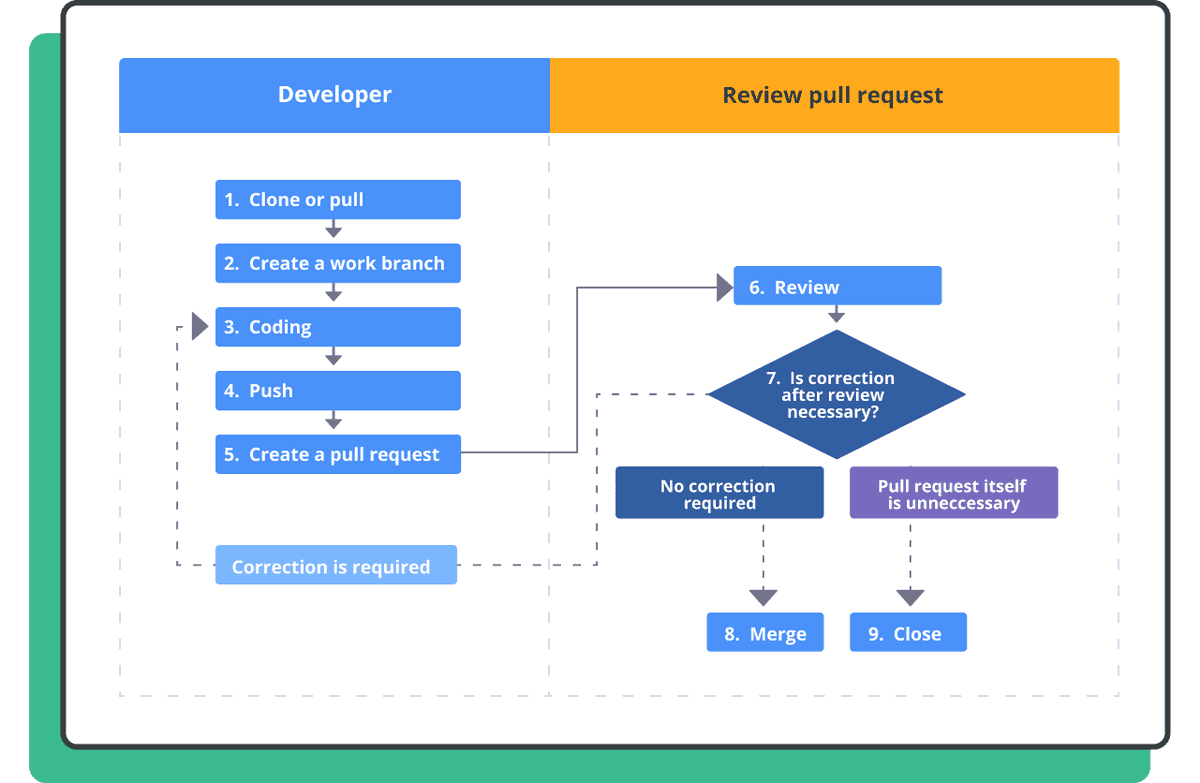
Keep the scope tight
The strongest PRs usually solve one clear problem. A well-scoped contribution makes its goal obvious, keeps the change set focused, and makes it easy for a reviewer to understand what they are being asked to evaluate. AI tools can be very helpful once you know what you want to change, but they are much less effective when pointed at a broad prompt like “improve the documentation,” which often produces large, low-context diffs that are difficult to review and hard to merge.
Limit the files you touch
A focused PR is not just about intent. It is also about surface area. As the number of files in a change increases, the effort required to review it usually increases too. This is especially true when a PR spans multiple parts of the stack. Small, contained changes are easier to reason about, test, and merge with confidence than PRs that require multiple people from different Dagster teams to review.
Choose the right part of the codebase
The part of Dagster you are changing can also affect how easily a contribution lands. Changes to the core framework often require broader design context and more coordination, which can make them take longer to evaluate. For many contributors, docs, examples, community-integrations, and other focused user-facing improvements are the fastest path to impact. These contributions are extremely valuable and often much easier for us to review and ship.
Your contributions make Dagster
Dagster has been shaped by community contributions from the beginning, and that has not changed. Even as the mechanics of contributing evolve, we still believe that thoughtful contributions from users and community members improve the project.
Our goal is not to make contributing more restrictive. It is to make the process clearer, smoother, and more predictable for everyone involved. That means better tooling, better guidance, and better signals about what kinds of contributions are easiest to review and merge.
We are grateful to everyone who has contributed to Dagster over the years, whether through code, documentation, integrations, bug reports, or feedback. That participation still matters deeply to us.
In the next post, we will go deeper into the technical side of our monorepo migration using Copybara, including the hub-and-spoke model we adopted and how it has helped us build a more unified development workflow.