




Finally, an org-wide data catalog you can trust

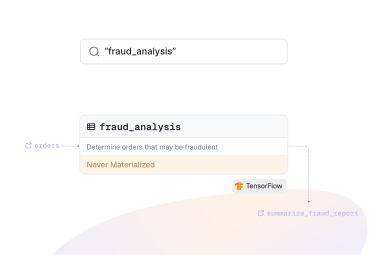
With Dagster, you get to see the metadata, the last update, and how the asset connects with other data—all in one, searchable view.

Get direct access to the data behind the inputs & outputs of your pipelines across the org.

Dagster Data Catalog

A data catalog that shows you what's happening in real-time

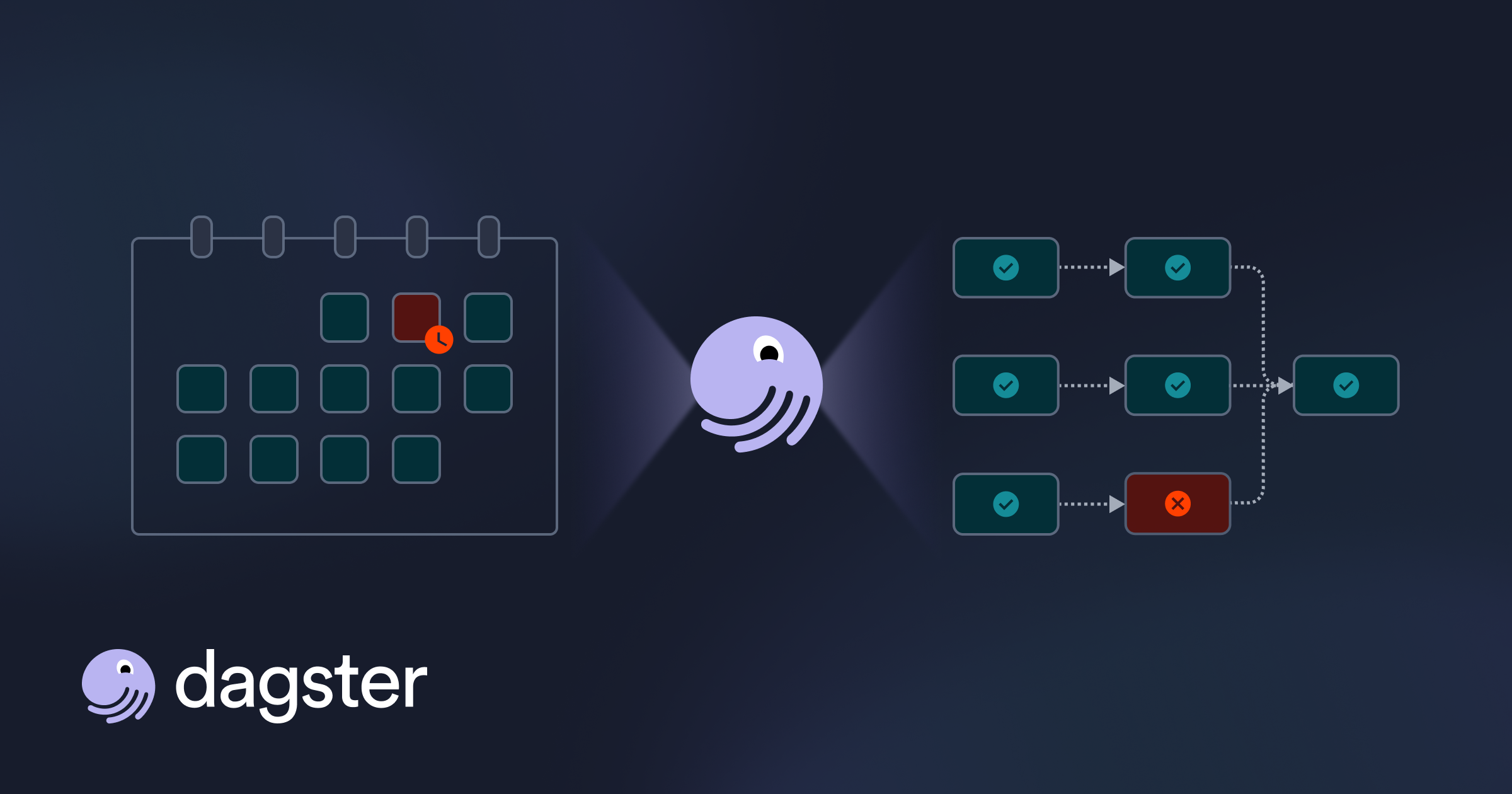
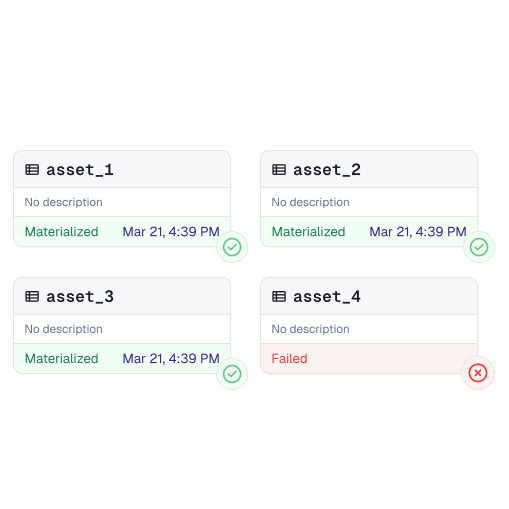
Your catalog, always up-to-date

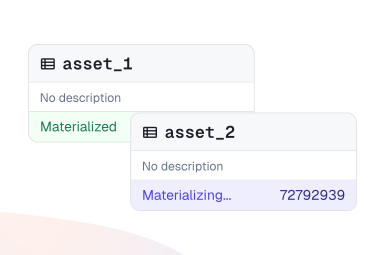
Dagster’s catalog stays in sync with every run, so your team never has to question the accuracy or freshness of data, where it lives, and how it flows.

No manual updates or painful integration projects required.

Triage issues in one dashboard, not many

When something breaks, most teams scramble across tools to trace what ran, what failed, and what was affected.

Dagster gives you a single place to investigate issues—where metadata, lineage, and run status are all connected.

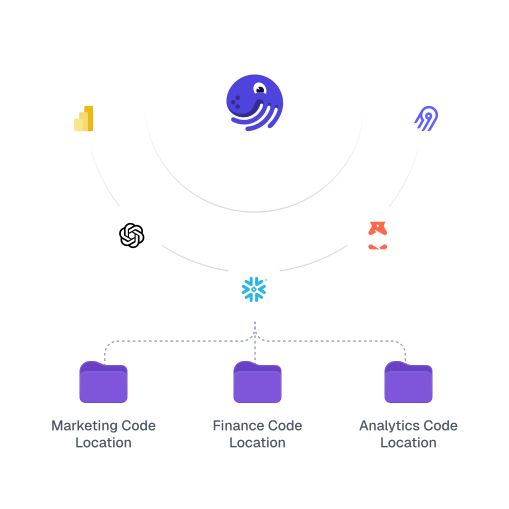
An org-wide catalog that lives where your pipelines run

Dagster’s catalog is part of the orchestration layer—automatically populated with metadata, always up to date, and always in sync with your pipelines. No syncing, no setup, no drift.

What makes Dagster’s catalog different

Always reflects the latest state of your pipelines

Because the catalog is part of Dagster, it’s automatically updated on every run. No more stale metadata or manual syncing.

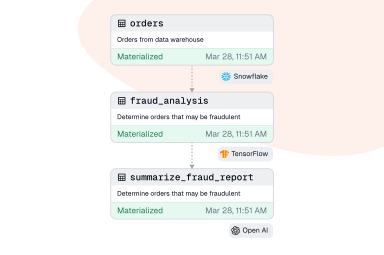
Organization-wide data lineage

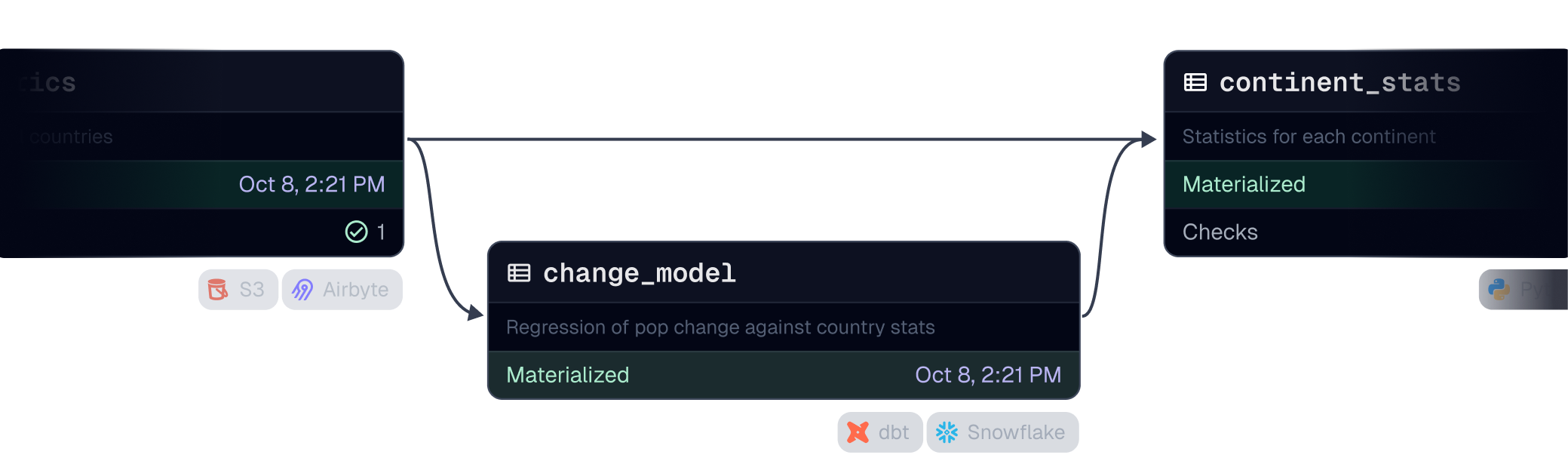
Understand dependencies and impacts at a glance—with visual lineage that’s generated automatically, no configuration required.

Find the data and assets you need, fast

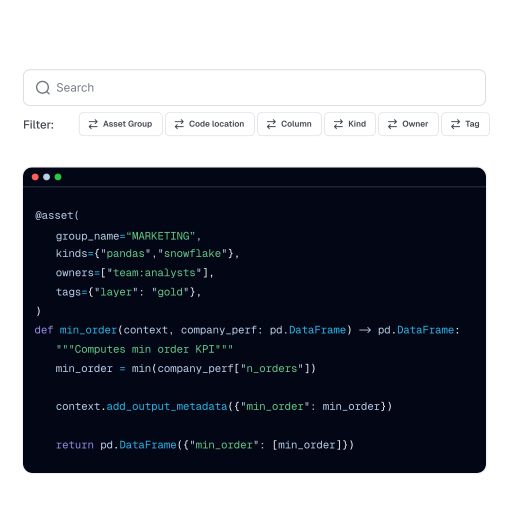
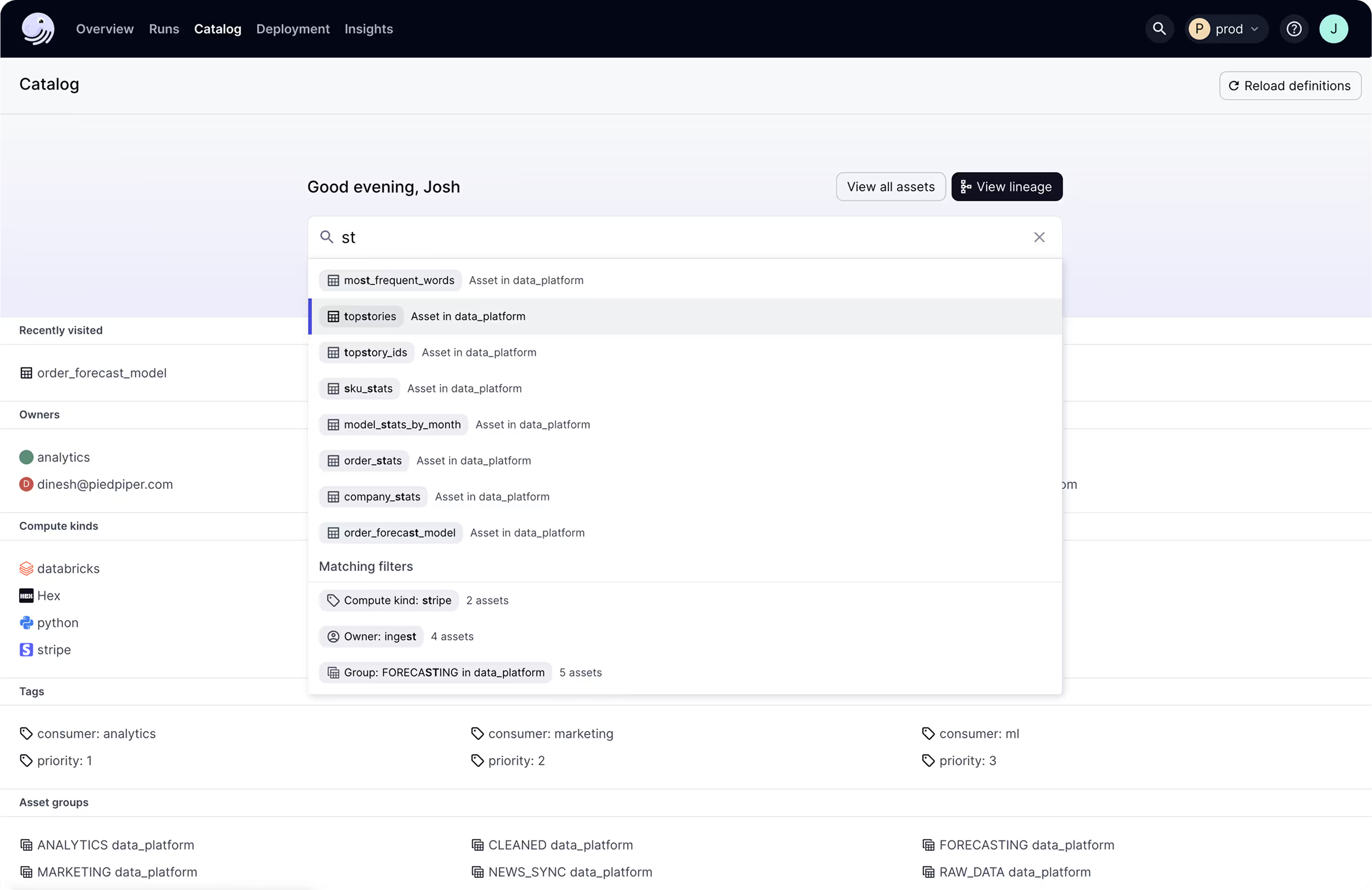
Search by asset name, type, freshness, or owner—right inside the Dagster UI. No extra tools or integrations needed.

Start your data journey today

Unlock the power of data orchestration with our demo or explore the open-source version.

Try Dagster+

A catalog that connects teams

Browse assets, inspect metadata, trace lineage, and explore dependencies—all in one clean, searchable interface.

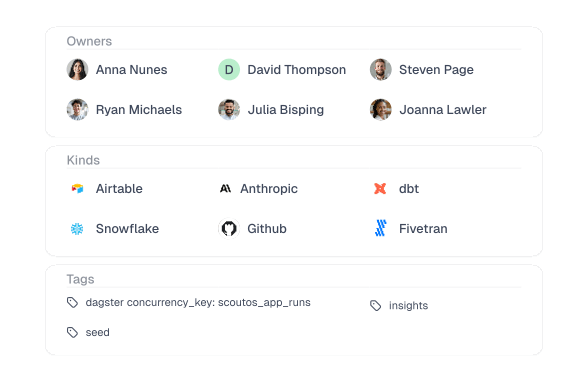
Search, filter, and drill into any asset

From freshness to owners to inputs and outputs—you get everything you need to trust and understand your data.

Automatically maps lineage across pipelines, tools, and teams

You can trace upstream inputs and downstream dependencies without digging through docs or guessing where data comes from.

Make confident, informed changes

When you understand how everything is connected, you can ship updates without breaking things.

Understand what broke—and why

See what changed, where it came from, and how it impacted everything downstream—without pulling in another team.

"Dagster is the single pane of glass that our team uses to not only launch and monitor jobs, but also to surface visibility into data quality, metadata and lineage, testing environments, and costs."
Zachary Romer
Lead Data Infrastructure Engineer | Empirico

Latest writings

The latest news, technologies, and resources from our team.

Dignified Python: 10 Rules to Improve your LLM Agents

January 9, 2026

Dignified Python: 10 Rules to Improve your LLM Agents

Modern LLMs generate patterns, not principles. Dignified Python gives agents the intent they lack, ensuring code is explicit, consistent, and engineered with care. Here are ten rules from our Claude prompt.

Evaluating Model Behavior Through Chess

January 7, 2026

Evaluating Model Behavior Through Chess

Benchmarks measure outcomes, not behavior. By letting AI models play chess in repeatable tournaments, we can observe how they handle risk, repetition, and long-term objectives, revealing patterns that static evals hide.

How to Enforce Data Quality at Every Stage: A Practical Guide to Catching Issues Before They Cost You

January 6, 2026

How to Enforce Data Quality at Every Stage: A Practical Guide to Catching Issues Before They Cost You

This post gives you a framework for enforcing data quality at every stage so you catch issues early, maintain trust, and build platforms that actually work in production.